Tell about it
“Instructions for living a life.
Pay attention.
Be astonished.
Tell about it.”
— Mary Oliver
I have always loved this poem by Mary Oliver. I think I’ve done okay-ish at the first two. But the “tell about it” has always made me uneasy.
Partly because, to me, it came to mean things I’m not very good at, or don’t fully agree with. What does “tell” really mean?
Sometimes I fear it turns awe into obligation. What if I don’t have the words to tell about it? What if my words are clumsy, insufficient, and arrive late?
I do appreciate that she wrote tell and not create. Tell is almost domestic. Almost casual. Just telling. It could be a barber who notices a beautiful sunset at the end of the day and rushes home to tell his wife about it. We don’t have to be painters who paint it.
But what if I don’t have anyone to tell about the sunset? Does it not count then? Does a life need an audience of listening ears to be fully lived? What if I’m someone who is astonished all the time and simply tired of endlessly recruiting listeners?
I think the telling might be there in the poem so astonishment doesn’t evaporate on the spot. But even then, I wish she had written: “Reflect on it.” Or "journal about it".
And yet, even that raises questions. What about those who can't journal? What about the illiterate? And what about those who are old, with dementia?
My tentative conclusion is this: astonishment is allowed to be frequent, easy, and fleeting. It is allowed to be fully lived without proof. Sometimes they are complete simply by having passed through us.
++++
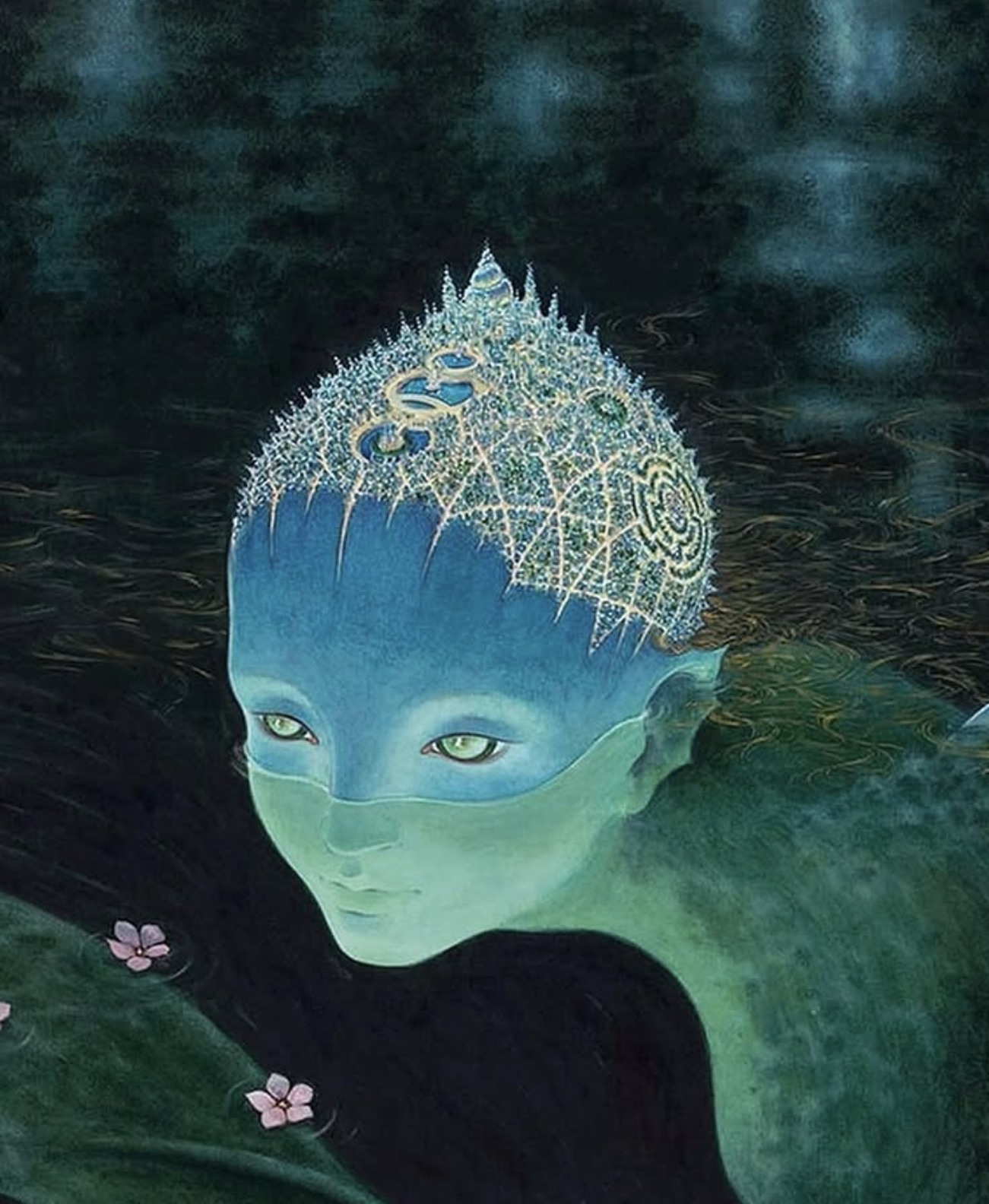
** I’ve had this painting saved for sometime. And now it felt fitting for this post. When I looked into it more closely just now, I discovered by sheer accident and to my own astonishment that the painting was inspired by Mary Oliver’s “The Sea”.
I’m grateful for people who are able to capture astonishment and tell about it, so that people like me can have access to it, too.